Works / Chair
Taar No. 1
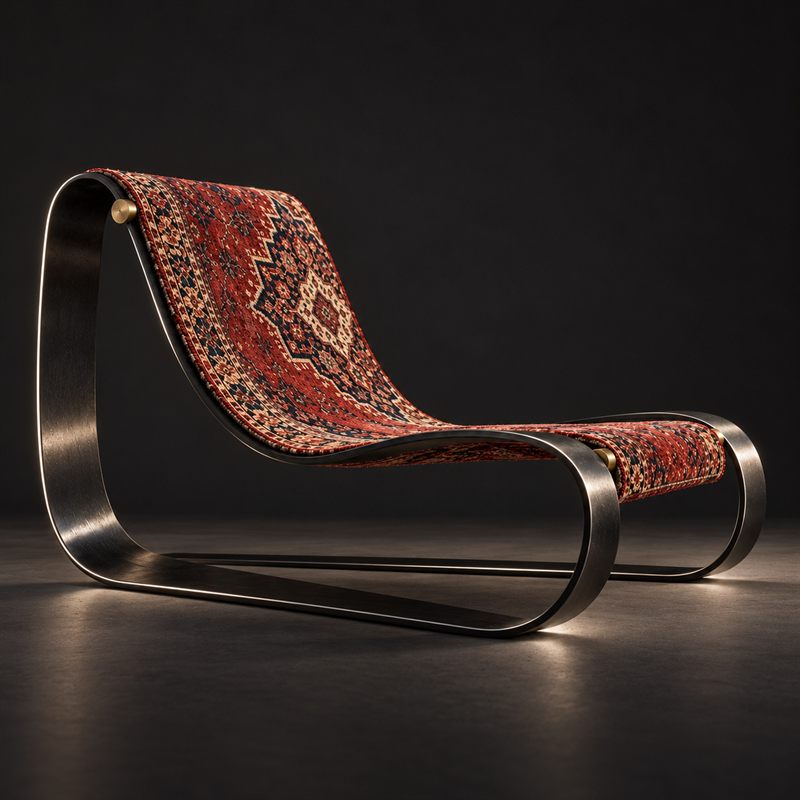
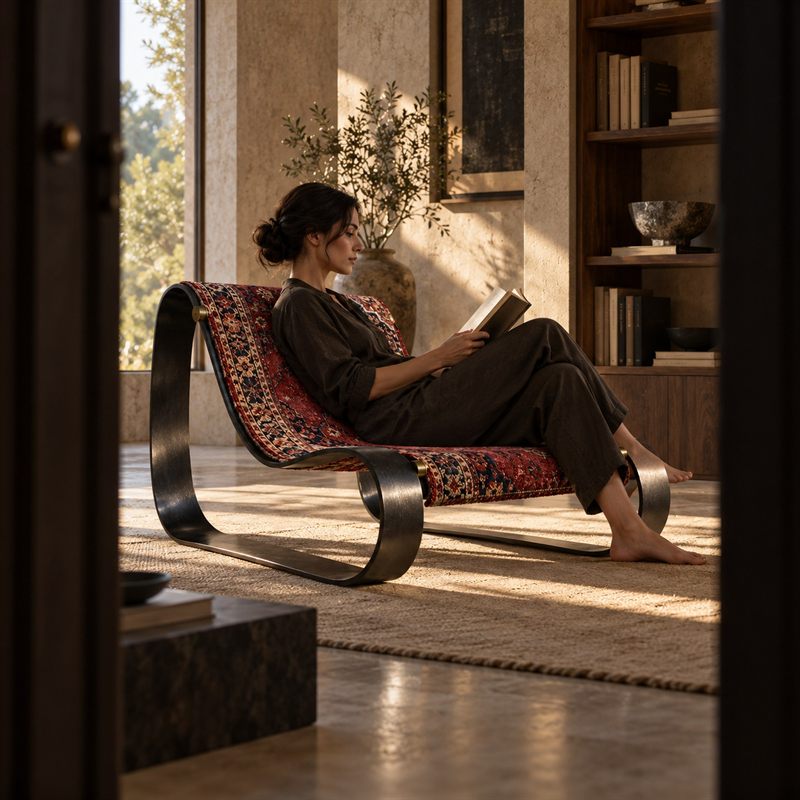
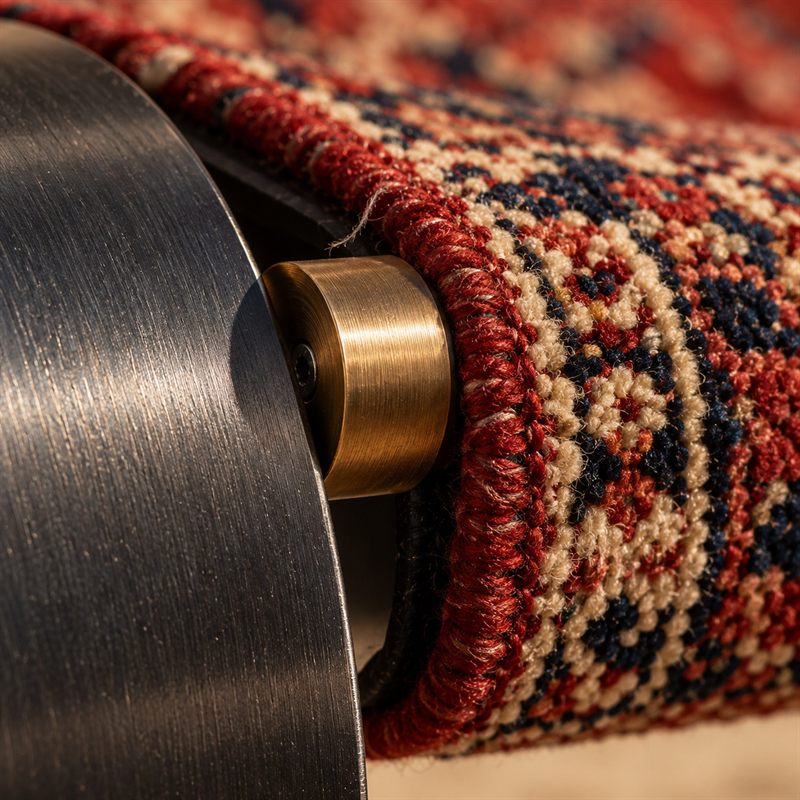
Taar No. 1 begins with a refusal to treat carpet as upholstery or a decorative image applied after the chair has been designed. Its structure is a single continuous ribbon of blackened stainless steel, bent into two broad loops that establish the seat angle, support the body and return to the floor without conventional legs. Between them, one hand-knotted textile plane forms the seat and back. The weaving is developed specifically for the curved load path: knot density increases at the sitting zone, the bound edges carry hidden reinforcement, and four machined bronze fittings allow the panel to be tensioned and replaced without dismantling the frame.
The pattern starts from the logic of a Persian border and an offset medallion, but it is interrupted by the chair’s bend and by the body of its user. What would normally organise a rectangular field becomes spatial and incomplete. Madder red, midnight indigo and restrained ivory retain the material depth of traditional dyed wool; the dark industrial frame makes no attempt to imitate historic furniture. Light completes the object’s reading. A low beam changes the apparent colour as it crosses the pile, exposes individual knots and throws a severe continuous shadow from the steel ribbon.
Designed for specialist fabrication rather than mass production, each of the twelve chairs records small differences in weaving, patina and tension while preserving the same exact geometry.
- Type
- Chair
- Materials
- Blackened stainless steel, hand-knotted wool, bronze
- Edition
- Edition of twelve
- Design
- Hamid Motahari